The dawn of 2025 marks a turning point for cryptocurrency investors. Grayscale’s launch of the XRP Trust ETF and BlackRock’s Bitcoin ETF revenue explosion underscore a maturing market where buying crypto securely aligns seamlessly with traditional finance. These milestones reduce custody risks, boost liquidity, and invite institutional capital, making digital assets less speculative and more like blue-chip holdings.

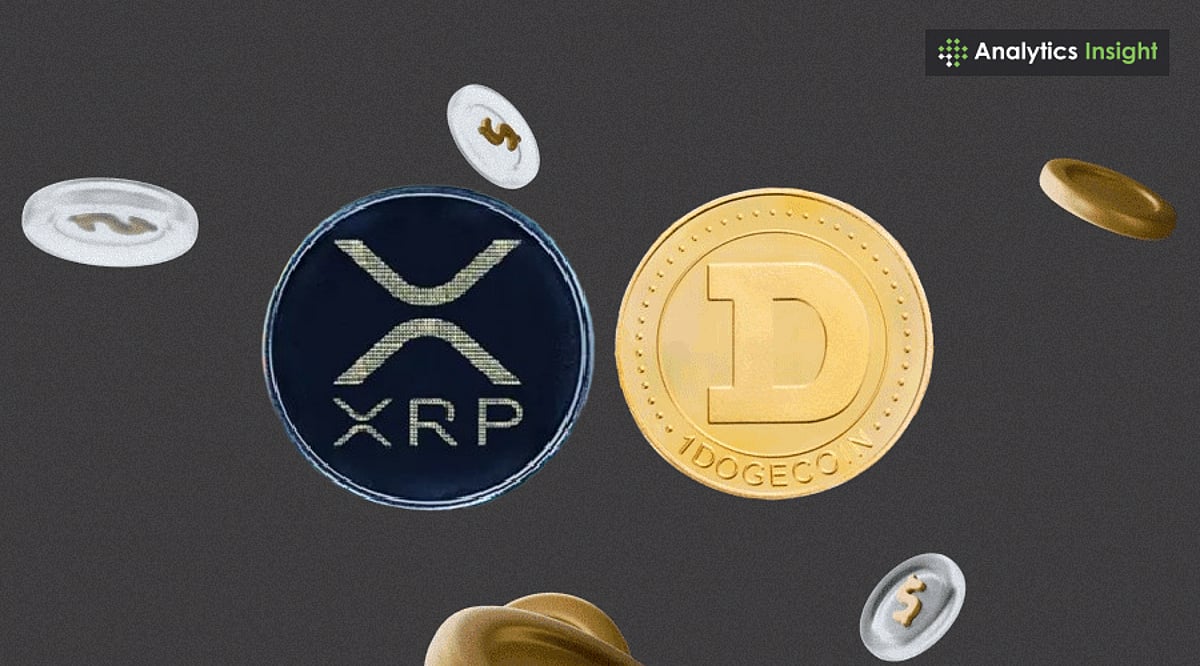
XRP, trading at $2.19, powers the resilient XRP Ledger, which has handled over 4 billion transactions since 2012. Grayscale’s GXRP offers direct exposure without the headaches of private keys or exchanges. Investors can now hold XRP alongside stocks and bonds in standard brokerage accounts, a game-changer for portfolio diversification.
Grayscale XRP Trust ETF Unlocks Regulated XRP Exposure
Grayscale Investments launched the Grayscale XRP Trust ETF (ticker: GXRP) on NYSE Arca on November 24,2025. This spot ETF converts a prior closed-end trust, delivering efficient tracking of XRP’s price. Early data shows impressive traction: GXRP clocked $67.4 million in net inflows, signaling strong demand from institutions wary of direct crypto custody or over-the-counter trades.
What sets GXRP apart? It operates under SEC oversight, providing daily transparency via audited holdings. For risk-averse investors, this means audited custodians manage the actual XRP, eliminating self-custody pitfalls that plagued early crypto adopters. As a CFA charterholder with over a decade in markets, I view GXRP as validation that altcoins like XRP deserve a seat at the institutional table. Its 0% initial fee structure further lowers barriers, positioning it as a cornerstone for Grayscale XRP Trust buying guide strategies.
The launch coincides with a flurry of XRP products, including 21Shares’ ETF on December 1 and others from Franklin and Bitwise. This competition fosters liquidity, with GXRP joining the NYSE’s ecosystem to trade alongside giants. Early inflows from a $1.5 trillion asset manager highlight how these vehicles capture pent-up demand.
BlackRock’s Bitcoin ETF Sets Revenue Records
Meanwhile, BlackRock’s iShares Bitcoin Trust (IBIT) has shattered benchmarks. Launched in January 2024, it amassed $70 billion in assets within 341 days – the fastest ETF ever to hit that mark. By October 2025, assets neared $100 billion, generating $245 million in annual fees and eclipsing BlackRock’s other top performers.
This surge reflects Bitcoin’s evolution from fringe asset to mainstream staple. IBIT’s passive strategy mirrors spot Bitcoin price, backed by top-tier custodians. Fees, though modest at scale, underscore profitability: at current trajectories, they outpace legacy products. For investors, IBIT proves regulated wrappers can deliver crypto beta with equity-like ease, slashing volatility concerns through familiar channels.
Contrast this with pre-ETF days, when buying Bitcoin meant navigating unregulated exchanges. Today, IBIT’s liquidity rivals S and amp;P 500 ETFs, with billions in daily volume. Its success validates BlackRock Bitcoin ETF safe investment narratives, drawing pensions and endowments that demand compliance.
Institutional Inflows Herald Safer Crypto Horizons
Together, GXRP and IBIT amplify safety in tangible ways. First, regulatory oversight ensures prospectus disclosures, NAV calculations, and anti-fraud protections absent in spot markets. Grayscale and BlackRock’s involvement adds reputational safeguards; these firms manage trillions, so lapses invite scrutiny.
Second, diversification blooms. GXRP lets portfolios blend Bitcoin via IBIT with XRP’s payment utility, hedging against single-asset risks. Inflows data – $67.4 million for GXRP, tens of billions for IBIT – reveal crypto ETFs 2025 secure purchase trends, with institutions allocating 1-5% to digital assets.
Liquidity is the unsung hero. ETFs trade intraday on NYSE Arca, with tight spreads versus crypto exchanges’ slippage during volatility. Accessibility via Roth IRAs or 401(k)s further democratizes entry, aligning with my philosophy of disciplined, long-term exposure.
Yet even with these advances, investors must pair enthusiasm with prudence. Volatility persists – XRP at $2.19 can swing on regulatory news or ledger upgrades, while Bitcoin’s path remains tied to macro cycles. My approach emphasizes position sizing: limit crypto to 5-10% of portfolios, rebalance quarterly, and favor ETFs for their built-in guardrails.
Comparing Key Crypto ETFs: Performance Snapshot
ETF Comparison: GXRP vs. IBIT vs. GBTC
| ETF | AUM | Inflows | Fees | Launch Date |
|---|---|---|---|---|
| Grayscale XRP Trust ETF (GXRP) | N/A | $67.4M net | $0% initial fee | November 24, 2025 |
| BlackRock iShares Bitcoin Trust (IBIT) | $70B (in 341 days) | $70B amassed | $245M annual | January 2024 |
| Grayscale Bitcoin Trust ETF (GBTC) | N/A | N/A | N/A | N/A (passive Bitcoin tracking) |
This table underscores the momentum. GXRP’s rapid inflows mirror IBIT’s trajectory, but with altcoin flair. Institutions favor these for tax efficiency – no capital gains on intraday trades – and counterparty protections via qualified custodians. BlackRock’s scale, managing $1.5 trillion elsewhere, reassures skeptics, while Grayscale’s pivot from trusts to ETFs shows adaptability. Together, they embody institutional crypto buying trends, with analysts projecting $250 billion in total crypto ETF assets by year-end 2025.
Accessibility extends to retirement accounts, a boon for long-term holders. Imagine funding an IRA with GXRP shares, harvesting XRP’s utility in cross-border payments without wallet worries. IBIT complements this, capturing Bitcoin’s store-of-value narrative amid fiat debasement fears. These vehicles sidestep exchange hacks, like the FTX fallout, by segregating client assets under SEC rules.
Looking ahead, expect more altcoin ETFs – Dogecoin and others debuted alongside GXRP, per NYSE approvals. This proliferation dilutes single-asset risks, fostering a balanced crypto sleeve. For novices, start small: allocate via low-cost brokers like Fidelity or Schwab, which list both GXRP and IBIT. Monitor NAV premiums via ETF. com, and dollar-cost average to tame volatility.
Navigating Risks in the ETF Era
Safety isn’t absolute. ETFs track spot prices but can’t escape crypto’s beta to equities or geopolitics. GXRP, tied to Ripple’s legacy, faces litigation echoes, though resolved cases bolster confidence. IBIT contends with Bitcoin halvings and miner dynamics, yet its $100 billion AUM threshold signals resilience. Diversify across both, perhaps weighting Bitcoin heavier for stability.
Fees matter too: GXRP’s 0% teaser yields to standard rates post-launch, while IBIT’s efficiency at scale keeps costs under 0.25%. Compare to direct buys, where spreads and taxes erode returns. In my 12 years analyzing markets, these ETFs echo gold ETFs’ 2004 debut – initial hype, then steady integration.
These questions capture investor hesitations, but answers tilt positive. Regulatory filings, like those accelerating XRP products, pave smoother paths. As portfolios blend digital and traditional assets, 2025 cements crypto’s legitimacy. Disciplined entry via GXRP and IBIT isn’t just safer – it’s strategic, rewarding patience with compounded growth. Position now, and let institutional tailwinds do the heavy lifting.
About the Author