
Current market momentum and trends
Bitcoin is trading in a transitional phase, with price action reflecting a balance between institutional accumulation and broader macroeconomic uncertainty. The asset has recently consolidated within a defined range, setting the stage for the volatility expected in the 2026 forecast period. To understand where the price is heading, we first need to look at where it is standing right now.
The current baseline for Bitcoin's price action is characterized by steady, albeit slow, upward pressure. Analysts project a potential 5% increase in the immediate term, with some models suggesting a target near $64,153.87 over the next 30 days. This short-term optimism is grounded in recent on-chain data showing decreased exchange reserves, a signal often associated with long-term holding behavior rather than immediate selling pressure.
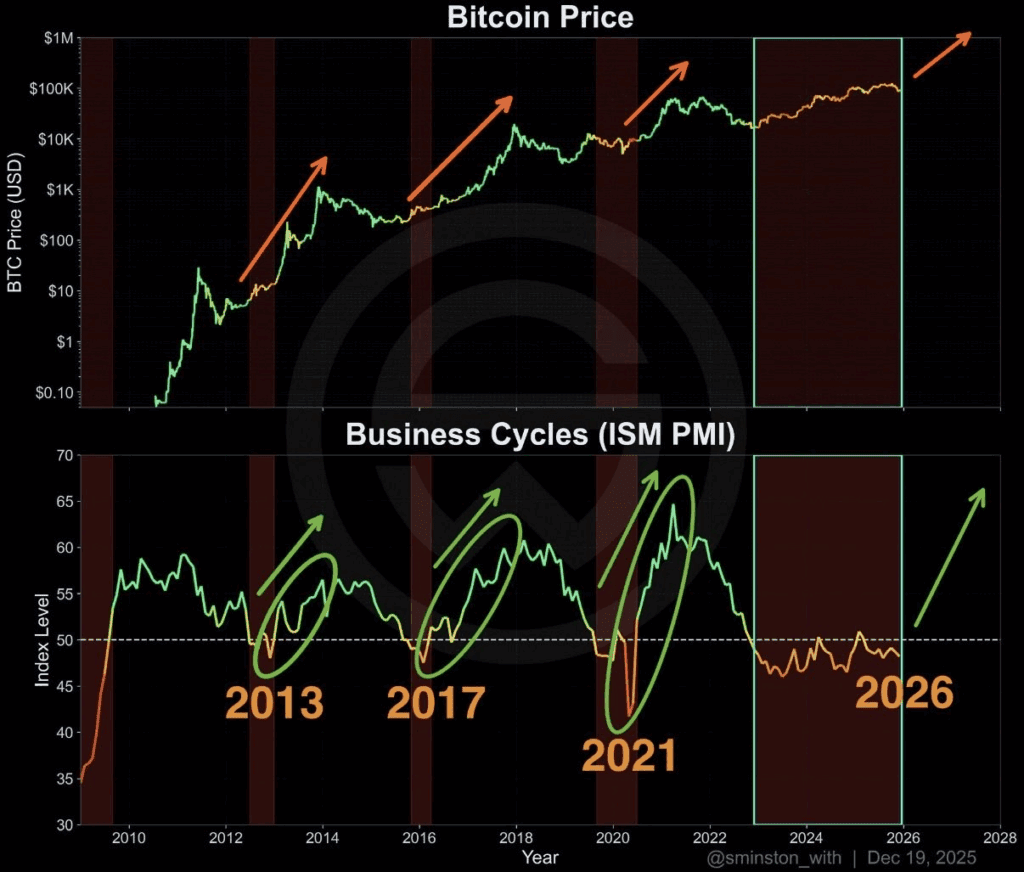
Looking further ahead to 2026, the narrative shifts from short-term fluctuations to structural growth. Crypto analysts expect Bitcoin to reach approximately $79,056.68 by the end of summer 2026. However, this trajectory is not linear. The path to that target may involve significant dips, with potential corrections dropping to lower support levels before resuming the upward trend. Understanding these cyclical patterns is essential for any strategy aimed at the 2026 horizon.
Technical analysis for 2026
Bitcoin’s path to 2026 is defined by the tension between established support levels and the momentum of its long-term moving averages. Technical analysts are currently watching a critical zone where price action often determines the broader trend for the following year. Understanding these patterns helps clarify whether the asset is preparing for a breakout or facing a consolidation phase.
Key support and resistance levels
The most significant price floor for Bitcoin in the current cycle rests near the $65,000 mark. This level has held firm during recent corrections, acting as a psychological and technical barrier that buyers have defended repeatedly. If Bitcoin breaches this support, the next major structural support lies closer to $50,000, a level that often attracts long-term accumulation.
On the upside, resistance clusters around the $92,500 to $100,000 range. Breaking above this ceiling requires sustained volume and a shift in market sentiment. A decisive move past these resistance points would signal a strong bullish trend, potentially opening the door for higher price targets in 2026. Until then, the price remains in a defined trading range.
Moving averages and trend signals
The 200-week moving average remains a primary indicator for long-term trend direction. Historically, Bitcoin’s price has found support near this average during early cycle phases, suggesting that dips to this level have offered attractive entry points for investors. The current position of the price relative to this moving average provides insight into whether the market is undervalued or overextended.
Shorter-term moving averages, such as the 50-week line, offer clues about immediate momentum. When the 50-week average crosses above the 200-week average, it often signals a bullish shift. Traders monitor these crossovers closely, as they can precede significant price movements. A sustained period above these averages would reinforce the case for a 2026 price increase.
Live market context
Technical analysis relies on real-time data to remain relevant. The following widgets provide current price action and a detailed chart view, allowing you to observe these levels as they develop.
Analyst forecasts and price ranges
Predictions for Bitcoin in 2026 vary significantly, reflecting the asset's inherent volatility and the diverse methodologies analysts use to value it. While some models suggest a consolidation near current levels, others project substantial gains driven by institutional adoption and macroeconomic shifts. Understanding this wide spectrum of expectations is essential for setting realistic goals and managing risk.
Conservative estimates often place Bitcoin in the $80,000 to $100,000 range. These forecasts typically assume that the post-halving momentum will fade without significant new institutional inflows. Analysts holding these views point to historical cycles where gains plateau after the initial surge, suggesting that 2026 might be a year of stabilization rather than explosive growth. This baseline scenario serves as a prudent floor for portfolio planning.
More bullish projections push toward the $150,000 to $180,000 mark. Sources like Bitcoin Suisse and various Yahoo Finance analysts argue that Bitcoin’s secular bull market remains intact. These models often cite the maturation of spot ETFs and the potential for Bitcoin to capture a larger share of global store-of-value assets, akin to gold’s market capitalization. If these trends accelerate, the upper end of this range becomes plausible.
At the extreme end, some models predict prices exceeding $200,000, with outliers even suggesting a path to $1 million over the longer term. These high-end forecasts usually rely on aggressive assumptions about global fiat debasement and rapid mainstream adoption. While less likely in the short term, they highlight the asymmetric upside potential that attracts long-term holders.
To ground these predictions in real-time market data, consider the current technical outlook. The following chart provides a live view of Bitcoin’s price action, helping you contextualize where we stand relative to these future targets.
Best hardware wallets for 2026
Securing your Bitcoin is as important as acquiring it. With the market showing signs of a potential breakout in 2026, having a reliable hardware wallet ensures your assets remain under your control, insulated from exchange risks and online threats. The following devices are top-rated for their security features, ease of use, and broad coin support.



As an Amazon Associate, we may earn from qualifying purchases.
The Ledger Nano X offers Bluetooth connectivity for mobile management and supports over 5,500 coins, making it a versatile choice for diversified portfolios. Its secure element chip provides robust protection against physical attacks. The Trezor Model T stands out with its touchscreen interface and open-source firmware, allowing for greater transparency and user verification. It also features Shamir Backup for enhanced recovery options. The BitBox02 Multi is ideal for those prioritizing security, featuring dual security modules and an air-gapped mode for Bitcoin-only operations.
| Model | Connectivity | Screen | Open Source |
|---|---|---|---|
| Ledger Nano X | USB-C, Bluetooth | Small OLED | No |
| Trezor Model T | USB-C | Touchscreen | Yes |
| BitBox02 Multi | USB-C, NFC | Small OLED | Yes |
No comments yet. Be the first to share your thoughts!