
2026 crypto adoption baseline
Global retail crypto activity reached $979 billion in the first quarter of 2026, according to the TRM Labs Q1 2026 Global Crypto Adoption Index. This volume underscores a market that continues to expand despite significant price volatility. Bitcoin declined 22% over the quarter, ending near $68,000, yet transactional engagement remained robust as capital flowed through established digital asset networks.
The scale of participation has shifted from niche speculation to mainstream integration. Approximately 1.01 billion people worldwide may now own cryptocurrency, representing roughly 12.24% of the global population. This broad base of holders provides a structural floor for market activity, distinguishing current adoption metrics from the speculative bubbles of previous cycles.
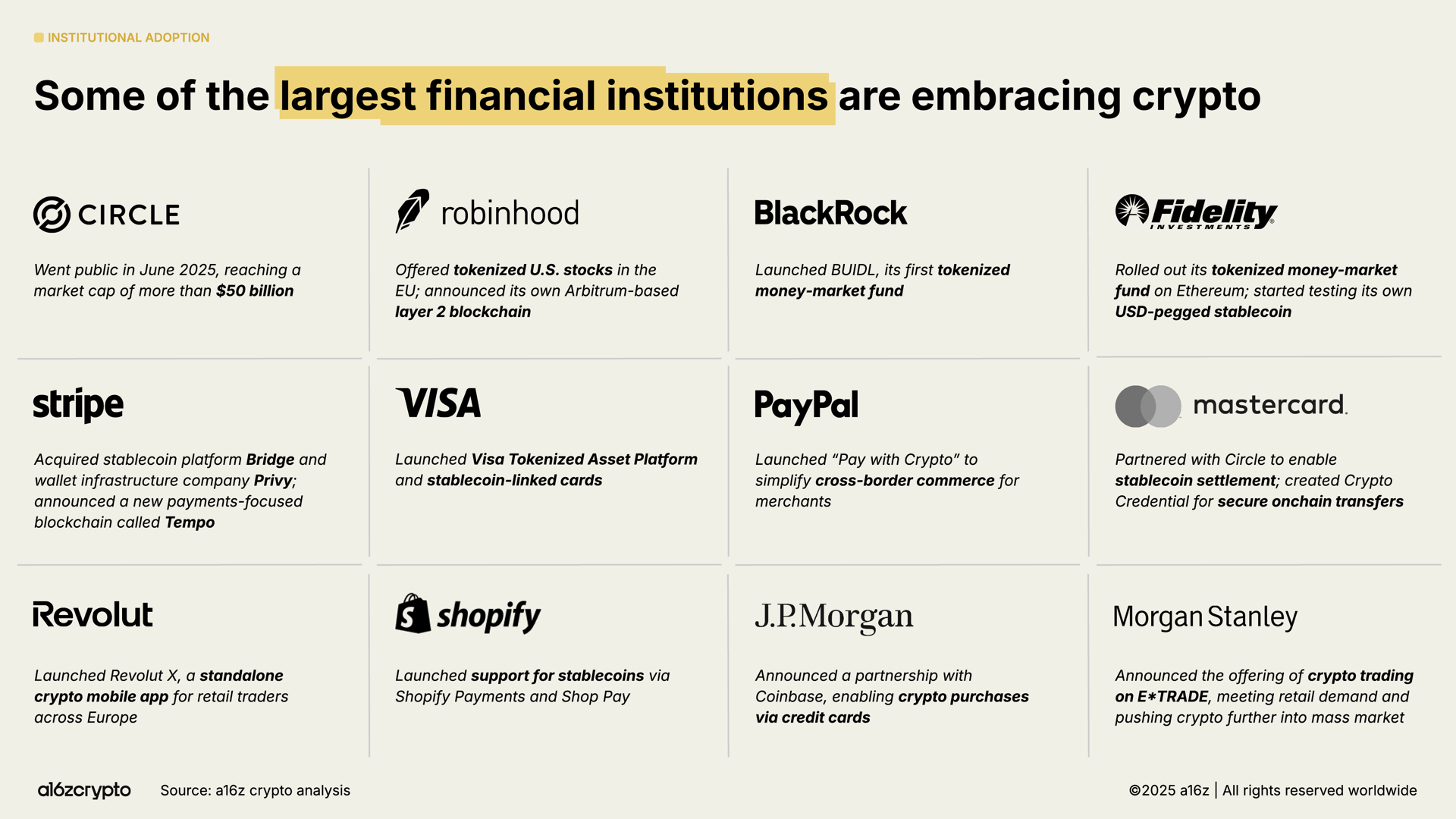
Institutional momentum has accelerated since the U.S. Securities and Exchange Commission approved the first spot Bitcoin and Ethereum ETFs in 2024. Financial platforms serving institutional clients have integrated these assets into broader portfolios, driving a transition from retail-only speculation to structured financial adoption. This shift is evident in the sustained trading volumes and the increasing complexity of products available to accredited investors.
The current market structure reflects a maturation phase where price discovery is increasingly influenced by institutional flows rather than retail sentiment alone. As traditional finance entities continue to build infrastructure for digital assets, the baseline for adoption rises, setting the stage for deeper integration in the coming years.
Wall Street integration accelerates
In January 2026, Bank of America and Merrill Lynch began recommending a 1% to 4% digital asset allocation to clients, marking a decisive shift from experimentation to active recommendation. This move signals that major financial institutions are no longer treating cryptocurrency as a speculative novelty but as a standard component of portfolio diversification.
The acceleration follows the broader momentum that began in 2024, when the U.S. Securities and Exchange Commission approved the first spot Bitcoin and Ethereum Exchange Traded Funds (ETFs). Since then, financial platforms serving institutional clients have systematically integrated crypto infrastructure, allowing wealth managers to offer these assets with the same compliance and reporting standards as traditional holdings.
This institutional adoption is driven by clearer regulatory frameworks and a growing demand from high-net-worth individuals for alternative assets. As Morgan Stanley and other major firms note, digital assets are pushing into the mainstream, with global adoption surging as traditional finance bridges the gap between legacy banking and decentralized technology.
Traditional vs. Digital Asset Allocation
The following table contrasts traditional asset allocation limits with the new digital asset recommendations emerging from major banks in 2026.
| Category | Traditional Limit | New Digital Recommendation |
|---|---|---|
| Bank of America | <1% (Cash/Alternatives) | 1% - 4% Allocation |
| Merrill Lynch | <1% (Cash/Alternatives) | 1% - 4% Allocation |
| General Institutional | 0% (Excluded) | Up to 5% (Diversification) |
Bitcoin ETF price action
Bitcoin’s price trajectory in early 2026 reflects a market in transition, balancing institutional inflows against broader macroeconomic headwinds. While retail activity surged to $979 billion in Q1 2026, Bitcoin itself declined 22% over the quarter, settling near $68,000 as ETF flows dictated short-term volatility. This divergence highlights how institutional vehicles are no longer just passive holders but active drivers of price discovery.
The approval of spot Bitcoin and Ethereum ETFs in 2024 marked a turning point, accelerating adoption by major financial firms. As noted by Morgan Stanley, financial platforms serving institutional clients have rapidly integrated crypto assets, deepening the sector's role in traditional portfolios. This integration brings stability but also exposes crypto to traditional market sentiment, as seen in the Q1 correction.
Current market intelligence suggests that clearer regulation and accelerating institutional integration are poised to stabilize these fluctuations over the long term. However, near-term price action remains sensitive to ETF net flows and macro liquidity conditions. The following chart illustrates the current technical landscape for Bitcoin against the US dollar.
Regulatory clarity drives tokenization
The friction that once kept institutional capital on the sidelines is dissolving. In 2026, the primary catalyst for this shift is not speculative hype, but the establishment of clear regulatory frameworks. The World Economic Forum notes that regulatory clarity facilitates increased adoption and scalability of digital assets, turning compliance from a barrier into a foundation for growth [[src-serp-2]].
This stability has unlocked the tokenization of real-world assets (RWA). Major financial institutions are no longer experimenting with blockchain; they are deploying it to tokenize treasury bills, private credit, and real estate. The integration of these assets into traditional portfolio management systems allows institutions to access fractional ownership and 24/7 liquidity without sacrificing the audit trails required by regulators.
The momentum is visible in the rapid adoption of spot Bitcoin and Ethereum ETFs, which served as the bridge for mainstream financial platforms to integrate crypto custody and trading [[src-serp-8]]. As these regulatory guardrails solidify, the focus shifts from market entry to infrastructure scaling. Tokenization is becoming the standard for asset issuance, reducing settlement times and counterparty risk across global markets.
Retail Investors Drive Growth
While institutional players dominate headlines, the foundation of current market momentum rests with everyday consumers. A 2026 survey by Security.org reveals that 30% of Americans now hold cryptocurrency, a figure that has stabilized as digital assets move from speculative novelty to standard portfolio allocation.
More importantly, sentiment remains bullish among existing holders. The same report indicates that 61% of crypto owners plan to increase their investments this year. This intent to accumulate suggests that retail confidence is not merely reacting to short-term price spikes but is rooted in a longer-term belief in the asset class's utility and store-of-value properties.
Global activity mirrors this domestic trend. According to the Q1 2026 Global Crypto Adoption Index by TRM Labs, global retail crypto activity reached USD 979 billion in the first quarter. Despite Bitcoin declining 22% over that period to end near USD 68,000, transaction volumes remained robust, indicating that retail traders are actively buying dips rather than fleeing the market. This resilience highlights a maturing retail sector that is less prone to panic selling and more focused on strategic positioning.
Frequently asked questions about crypto 2026
Bitcoin’s price trajectory depends on macroeconomic factors, regulatory clarity, and institutional inflows. Current market signals suggest volatility will persist as adoption grows, but precise long-term valuations remain speculative.
Helpful gear
Use these product recommendations as a starting point, then choose the size, material, and price point that fit how you actually use the gear.
![The Crypto Millionaire Bible: [5 in 1] How to Easily Make Life-Changing Money in The Next Big 2025-2026 Bull Run with Smart Investing and Trading Any Cryptocurrency (Altcoins, Meme, NFT, Airdrops)](https://m.media-amazon.com/images/I/61K1jz+cWtL._AC_UY654_QL65_.jpg)


As an Amazon Associate, we may earn from qualifying purchases.
No comments yet. Be the first to share your thoughts!